What Makes 1530 Hand Pull Sheet Metal Storage a Practical Choice for Modern Workshops?
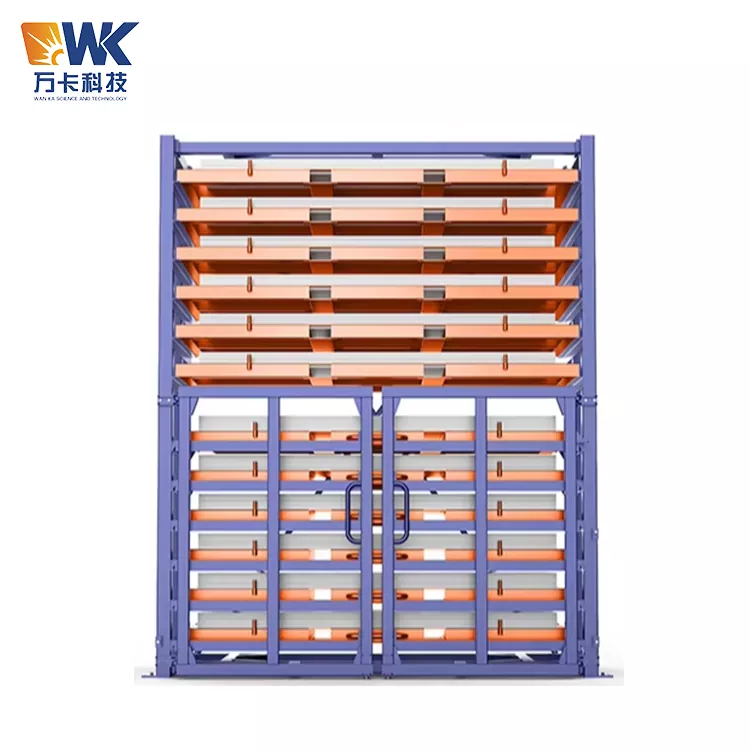
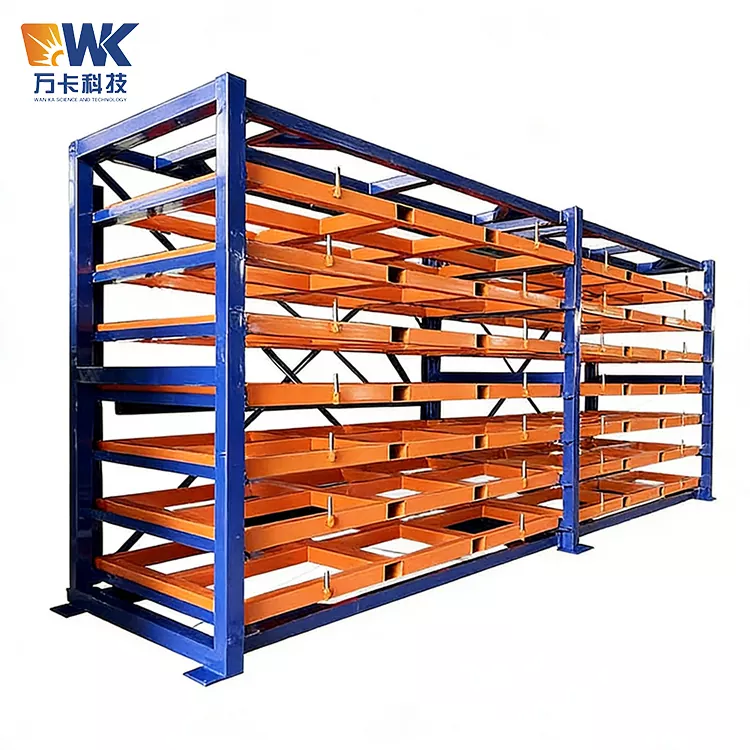
Efficient sheet metal storage is not simply about putting more material onto a rack. For small and medium-sized fabrication workshops, the real challenge is keeping metal sheets organized, accessible, protected, and easy to handle without consuming valuable production space. The 1530 Hand Pull Sheet Metal Storage addresses these everyday problems with a compact manual pull-out structure designed for sheet materials from approximately 1500 to 3000 mm.
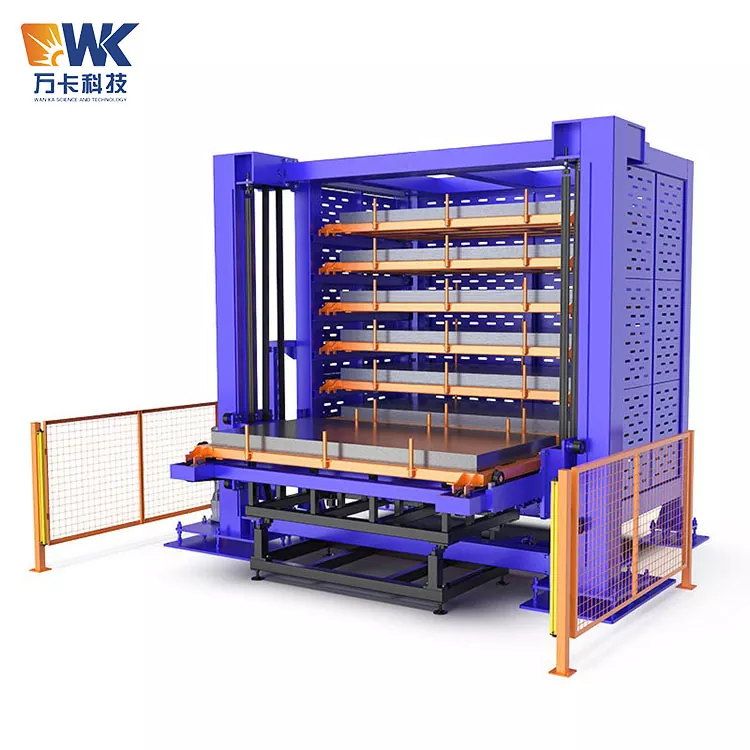
Traditional floor stacking often creates several connected problems: occupied floor area, difficult material identification, repeated handling, damaged sheet surfaces, and inefficient movement around cutting or fabrication equipment. The 1530 Hand Pull Sheet Metal Storage provides a more organized alternative by separating materials into individual storage levels and allowing operators to pull out the required layer for access. Its manual mechanical design does not require electricity, motors, or complex electronic controls, making it suitable for workshops where power availability, installation conditions, or equipment budgets are limited. For small laser cutting shops, sheet metal processors, hardware manufacturers, and decorative panel workshops, this type of storage can create a more structured material-handling workflow while making better use of available vertical space.
Table of Contents
- The Sheet Metal Storage Challenge
- What Is 1530 Hand Pull Sheet Metal Storage?
- Key Features That Matter in Daily Operations
- How the Storage System Improves Material Handling
- Typical Industrial Applications
- Storage Method Comparison
- Important Factors Before Purchasing
- Why Wanka Storage Co., Ltd. Focuses on Practical Storage Solutions
- Frequently Asked Questions
- Conclusion
The Sheet Metal Storage Challenge
Sheet metal is often purchased in batches because production requires different materials, thicknesses, finishes, and dimensions. The problem begins when those sheets have nowhere appropriate to go before they enter production.
Floor stacking may appear inexpensive, but it can quickly turn a workshop into a difficult working environment. Several sheets may need to be moved before an operator reaches the required material. Different specifications can become mixed together, increasing identification time. Large sheets can also occupy walkways or areas that could otherwise be used for production equipment.
Surface-sensitive materials create another concern. Stainless steel, coated panels, aluminum sheets, decorative panels, and other finished materials may be vulnerable to scratches, dents, bending, or unnecessary friction when they are repeatedly dragged across the floor or moved from one stack to another.
The challenge is therefore not simply storage capacity. A useful system must also consider accessibility, material organization, workshop footprint, handling effort, and the working environment.
What Is 1530 Hand Pull Sheet Metal Storage?
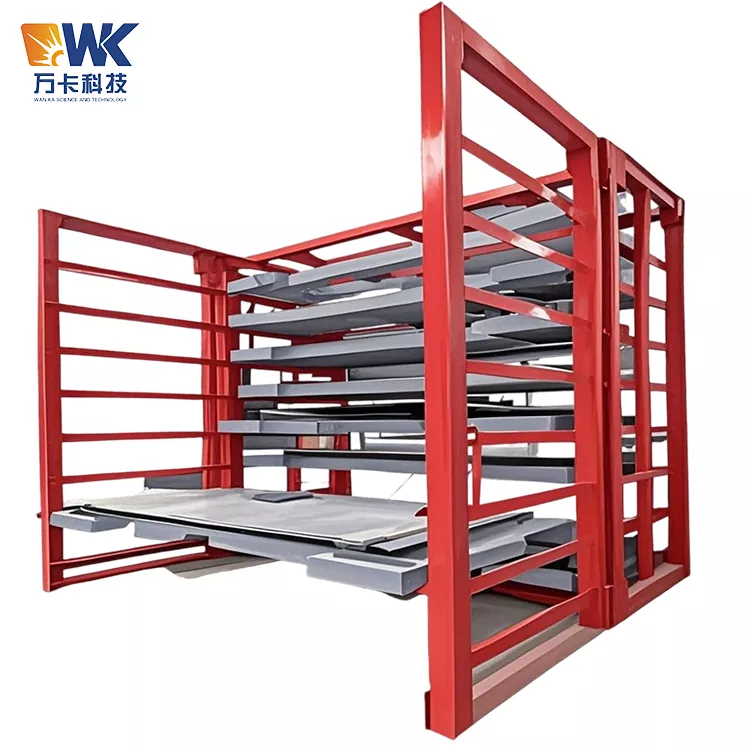
The 1530 Hand Pull Sheet Metal Storage is a manual pull-out storage solution designed around industrial sheet materials in the approximate 1500–3000 mm range. Wanka Storage Co., Ltd. positions the system for small and medium-sized factories involved in sheet metal processing, laser cutting, hardware manufacturing, and decorative panel processing.
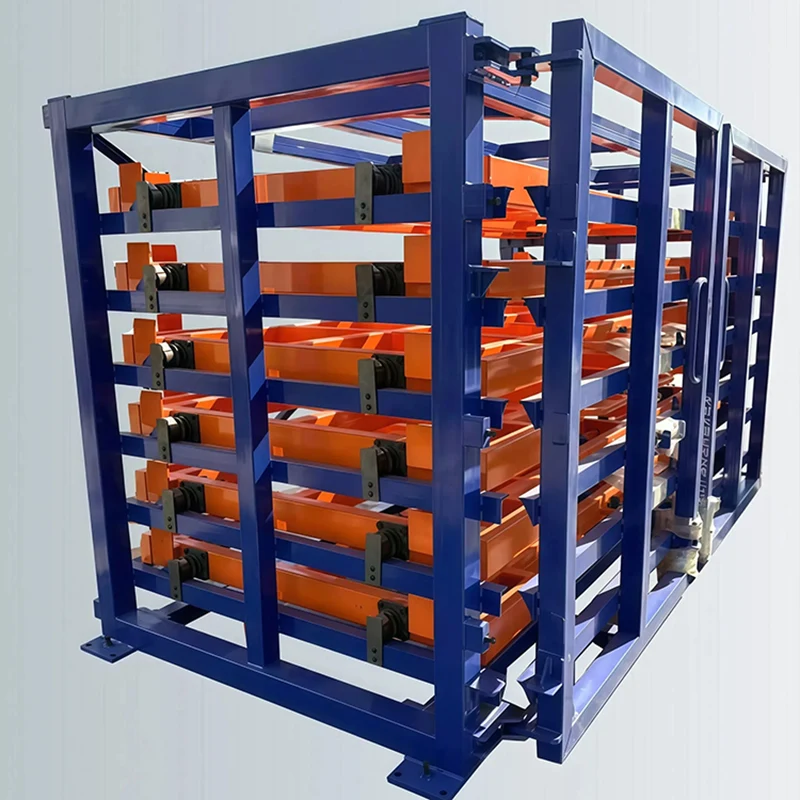
Instead of placing multiple sheets directly on the floor, the system organizes materials into separate storage layers. Operators can manually pull out the required layer, access the material, and return the layer after the operation.
One of its defining characteristics is the absence of an electric drive. The system uses a mechanical manual operating structure, meaning that it does not depend on motors, electronic controls, or a dedicated electrical connection. This can be particularly useful in older workshops, temporary production areas, or facilities where electrical modification would increase installation complexity.
Key concept: The purpose of a hand-pull storage system is not simply to store more sheets. It is to make stored materials easier to classify, reach, protect, and return while maintaining a more orderly production environment.
Key Features That Matter in Daily Operations
Manual Mechanical Operation
The manual design is especially relevant to factories that want straightforward equipment. With no motorized drive, the system can operate without a dedicated power supply. This reduces dependence on electrical infrastructure and avoids introducing additional electronic components into the storage process.
Separated Storage Levels
Individual storage levels allow different materials to be classified by thickness, size, finish, project, or production order. This is more practical than maintaining one large mixed pile where operators must repeatedly move materials to locate the correct sheet.
Compact Workshop Footprint
Vertical organization can help manufacturers make better use of available workshop space. Instead of allowing sheet material to spread across large areas of the floor, the storage structure concentrates inventory into a defined location.
Lower Operational Complexity
A manual system is easier to understand for operators who do not need to learn complicated control interfaces. For businesses prioritizing practical operation and straightforward maintenance, mechanical storage can be an effective part of a broader workshop organization strategy.
Adaptability for Small and Medium-Sized Facilities
Smaller workshops often face a different purchasing problem from large automated factories. They may need better organization without investing immediately in a fully automated warehouse. A manually operated sheet storage system can bridge that gap by improving the physical storage process while keeping the operating concept relatively simple.
How the Storage System Improves Material Handling
A good storage solution should improve the workflow before, during, and after production. The value of the 1530 design becomes clearer when its role is considered as part of the complete material-handling process.
- Classify incoming materials: Sheets can be assigned to dedicated storage levels according to material type, dimensions, thickness, or production requirements.
- Reduce unnecessary movement: Operators do not need to repeatedly reorganize a large floor stack simply to reach one specific sheet.
- Improve material visibility: Organized levels make it easier to understand where different materials are stored.
- Access the required level: The manual pull-out structure allows the selected storage layer to be brought outward for easier access.
- Return materials systematically: After use, remaining materials can be returned to their designated location instead of becoming part of an unorganized floor pile.
This sequence can be particularly useful in workshops where several orders are processed simultaneously. Better organization reduces the number of unnecessary handling steps and creates a more predictable relationship between storage and production.
Typical Industrial Applications
| Application | Common Storage Problem | Potential Benefit |
|---|---|---|
| Laser Cutting | Multiple sheet specifications and frequent material changes | Faster identification and organized staging |
| Sheet Metal Fabrication | Floor stacking consumes valuable working space | More structured material storage |
| Hardware Manufacturing | Mixed inventory and repeated handling | Clearer material classification |
| Decorative Panel Processing | Surface damage from uncontrolled stacking | Separated storage and reduced unnecessary movement |
The system is especially relevant when a workshop has regular sheet inventory but does not necessarily require a fully automated storage and retrieval system. It can also serve as an intermediate step for companies gradually upgrading their material management process.
Storage Method Comparison
| Factor | Floor Stacking | Ordinary Shelving | 1530 Hand Pull Storage |
|---|---|---|---|
| Material classification | Limited | Moderate | Layered organization |
| Power requirement | None | Usually none | None |
| Access convenience | Often difficult | Depends on structure | Pull-out access |
| Vertical space utilization | Low | Moderate | High potential |
| Material handling | Frequent rearrangement | May require additional handling | Dedicated pull-out layers |
The comparison does not mean that one storage method is appropriate for every facility. Floor stacking may work for temporary material staging, while automated systems may be suitable for high-volume operations requiring digital control. The hand-pull approach is particularly relevant where a factory needs improved organization and accessibility while maintaining a simple mechanical operating concept.
Important Factors Before Purchasing
Before ordering a 1530 Hand Pull Sheet Metal Storage system, purchasing teams should evaluate several practical factors:
- Sheet dimensions: Confirm that the storage dimensions correspond to the actual length and width of the materials handled in the workshop.
- Material weight: Review the expected load per storage level and avoid selecting equipment based only on sheet dimensions.
- Available floor area: Measure the installation location, working aisle, nearby equipment, doors, columns, and emergency access routes.
- Material types: Consider whether the inventory includes stainless steel, aluminum, coated sheets, carbon steel, decorative panels, or other materials requiring careful handling.
- Retrieval frequency: High-frequency operations require convenient access and clear material classification.
- Workshop infrastructure: Check whether electrical power, floor conditions, and installation access influence the equipment choice.
- Future inventory: Consider whether material types and quantities are likely to increase as production expands.
- Supplier support: Confirm available customization, installation guidance, quality inspection, maintenance support, and after-sales communication.
Accurate measurements and realistic workflow analysis are more valuable than choosing equipment from dimensions alone. A storage system should fit the actual production environment rather than forcing the workshop to change its workflow unnecessarily.
Why Wanka Storage Co., Ltd. Focuses on Practical Storage Solutions
Wanka Storage Co., Ltd. specializes in intelligent warehouse automation and sheet material storage solutions for manufacturing environments. Its product range covers manual, hand-pull, heavy-duty pull-out, and automated sheet storage configurations, allowing different facilities to select equipment according to material dimensions, load requirements, workshop conditions, and operational objectives.
For the 1530 Hand Pull Sheet Metal Storage, the emphasis is on practical storage for small and medium-sized industrial facilities. The product combines a manual mechanical structure with layered sheet organization and is intended for applications where straightforward operation and reduced dependence on electrical infrastructure are important.
Wanka also provides support covering pre-sale compatibility planning, quality control, installation guidance, maintenance, and product adaptation. For projects involving unusual workshop layouts or changing material requirements, discussing the operating environment with the supplier before purchasing can help ensure that the final configuration matches the actual application.
Practical Purchasing Support
When evaluating sheet metal storage, provide the supplier with sheet dimensions, approximate weight, material types, storage quantity, workshop dimensions, retrieval frequency, and available installation area. These details give engineers a clearer basis for recommending a suitable configuration.
Frequently Asked Questions
What sheet sizes can the 1530 Hand Pull Sheet Metal Storage accommodate?
What sheet sizes can the 1530 Hand Pull Sheet Metal Storage accommodate?
The 1530 model is designed around industrial sheet materials in the approximately 1500–3000 mm range. Exact usable dimensions should be confirmed according to the customer's sheet specifications and the final equipment configuration.
Does the 1530 Hand Pull Sheet Metal Storage require electricity?
No. The product uses a manual mechanical pull-out structure rather than an electric motor or electronic control system. This makes it suitable for workshops where electrical installation is limited or where a power-free storage solution is preferred.
Is it suitable for small laser cutting workshops?
Yes. The system is designed for small and medium-sized sheet-processing environments, including laser cutting, hardware processing, sheet metal fabrication, and decorative panel applications. Its value is particularly relevant where several sheet specifications need to be stored in an organized way.
Can different sheet materials be stored separately?
Yes. The layered structure allows operators to organize different materials by specification, thickness, finish, project, or other inventory criteria. Clear labeling can further improve identification and retrieval.
Can the storage system be customized?
Wanka supports specification adjustments and process adaptations according to working conditions. Buyers should provide detailed information about sheet dimensions, material weight, storage quantity, and workshop limitations when discussing customization.
How does hand-pull storage differ from automatic sheet storage?
Hand-pull storage relies on manual mechanical operation, while automatic systems use powered drives and control components. Manual systems generally have a simpler operating structure, whereas automated solutions may be considered when production volume, retrieval frequency, system integration, or digital inventory management requires additional automation.
What information should be prepared before requesting a quotation?
Prepare sheet length and width, thickness, approximate weight, quantity, material type, storage frequency, workshop dimensions, available installation area, and any special handling requirements. Photos or drawings of the proposed installation location can also help suppliers evaluate the project more accurately.
Conclusion
Sheet metal storage becomes a production issue when materials occupy too much floor space, take too long to retrieve, or are repeatedly exposed to unnecessary handling. The 1530 Hand Pull Sheet Metal Storage provides a practical way to organize approximately 1500–3000 mm sheet materials into dedicated storage levels while maintaining manual, power-free operation.
For small and medium-sized workshops, the main value lies in the combination of organized storage, pull-out access, space-conscious design, and straightforward mechanical operation. It can help create a cleaner material flow between incoming inventory and production without immediately requiring a complex automated warehouse.
The right solution ultimately depends on sheet dimensions, load requirements, storage volume, retrieval frequency, workshop layout, and future production plans. By evaluating these factors before purchase, manufacturers can build a storage system that supports both daily operations and long-term workshop development.
Ready to Improve Your Sheet Metal Storage?
If your workshop is dealing with limited floor space, disorganized sheet stacking, difficult material retrieval, or unnecessary handling, Wanka Storage Co., Ltd. can help evaluate a suitable storage configuration. Share your sheet dimensions, material requirements, storage quantity, and workshop layout with the team to discuss an appropriate solution.
Contact us to discuss your 1530 Hand Pull Sheet Metal Storage requirements and request a customized solution.
Related News
- How Does 1530 Automatic Sheet Metal Storage Improve Factory Efficiency?
- How Can a 2060 Heavy Duty Pull Out Forklift Rack Improve Warehouse Storage?
- How Does a 1560 Heavy Duty Pull Out Forklift Rack Improve Warehouse Storage?
- Where do poorly‑validated custom AS‑RS sheet‑metal projects expose integrators to contractual risks?
- Where do unoptimized plate‑storage layouts eat into fabricator operating profits?
- How Does a Manual Profile Warehouse Improve Storage Efficiency for Modern Businesses?
Leave me a message