4 Axis Handling Robot
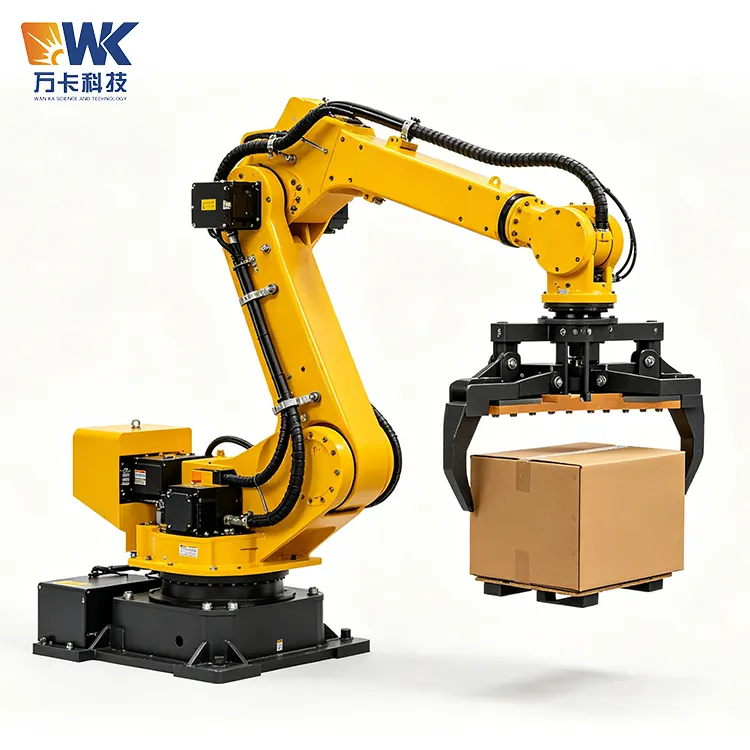
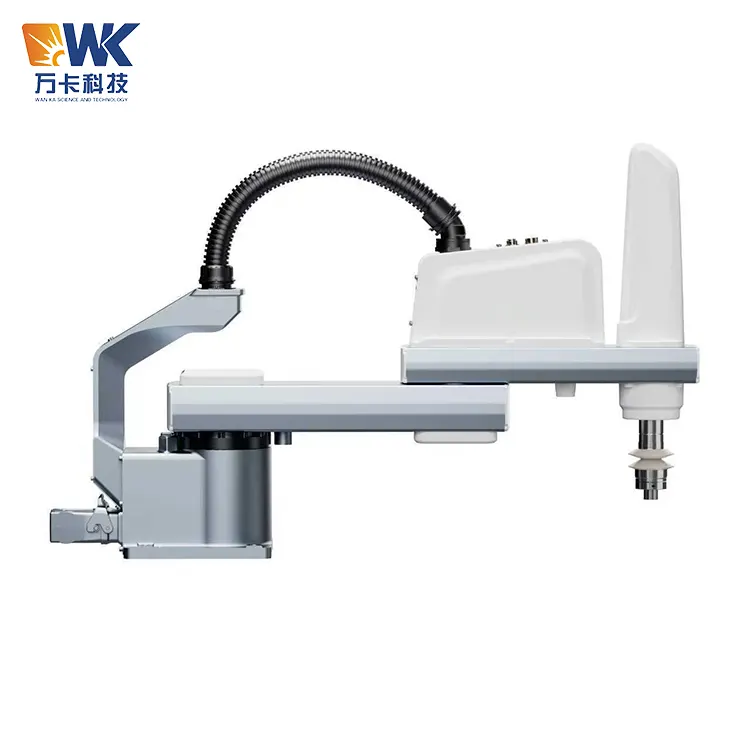
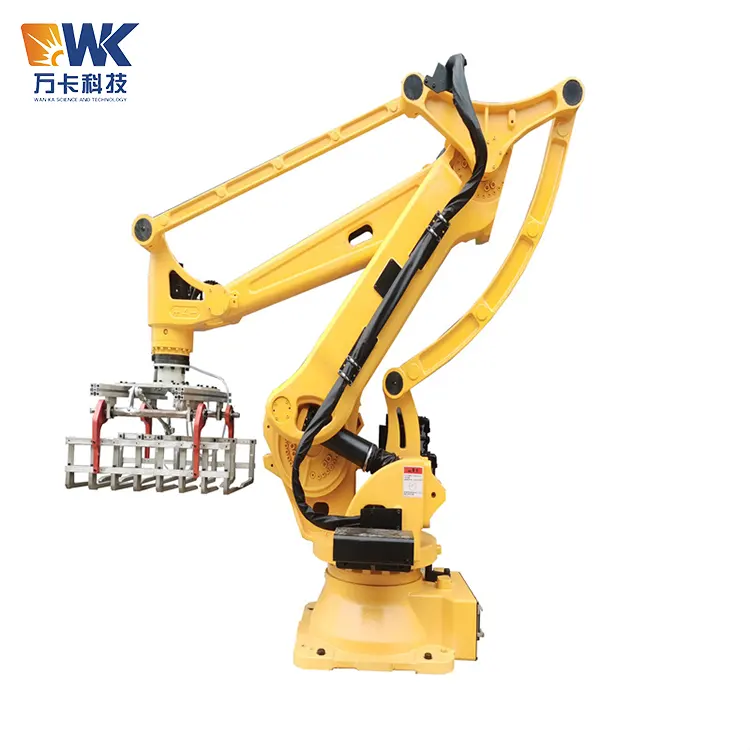
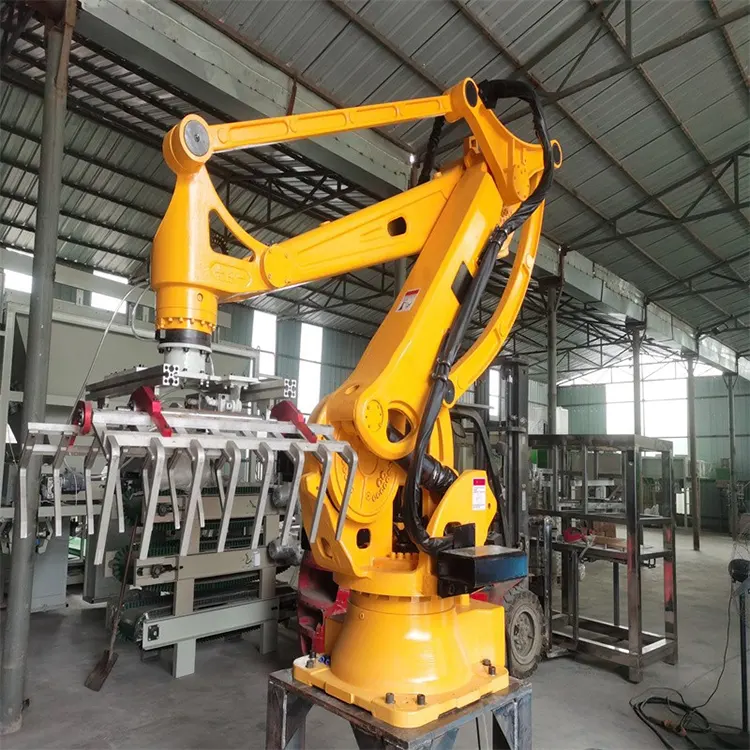
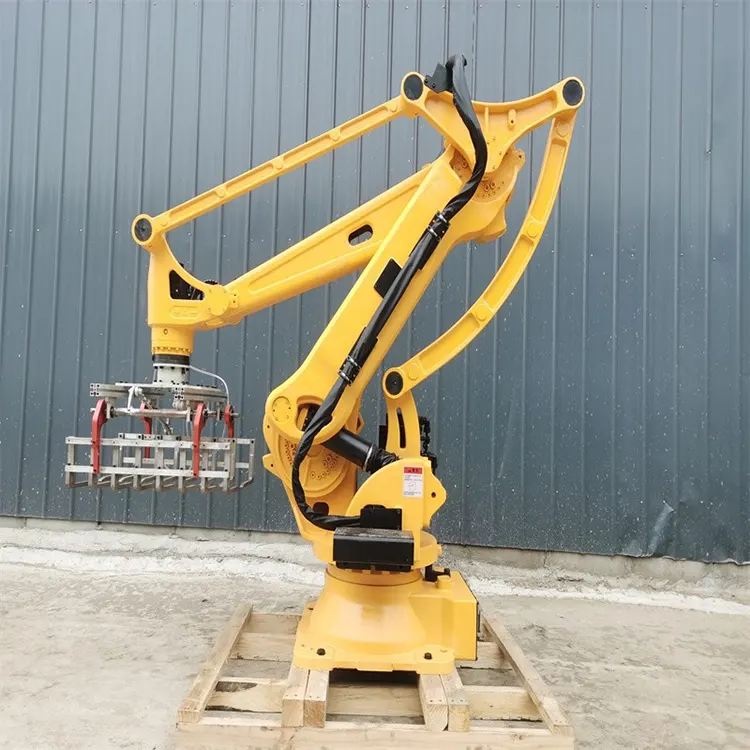
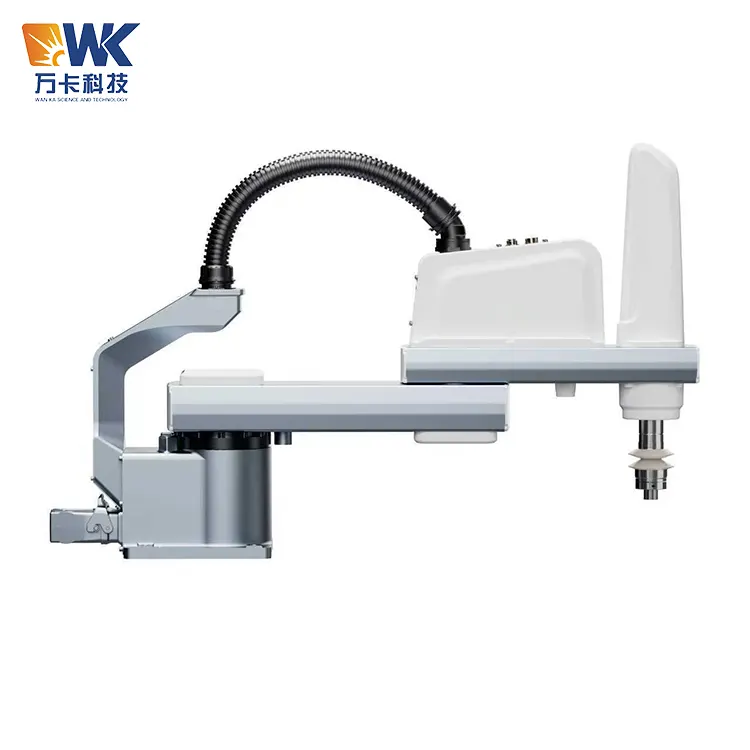
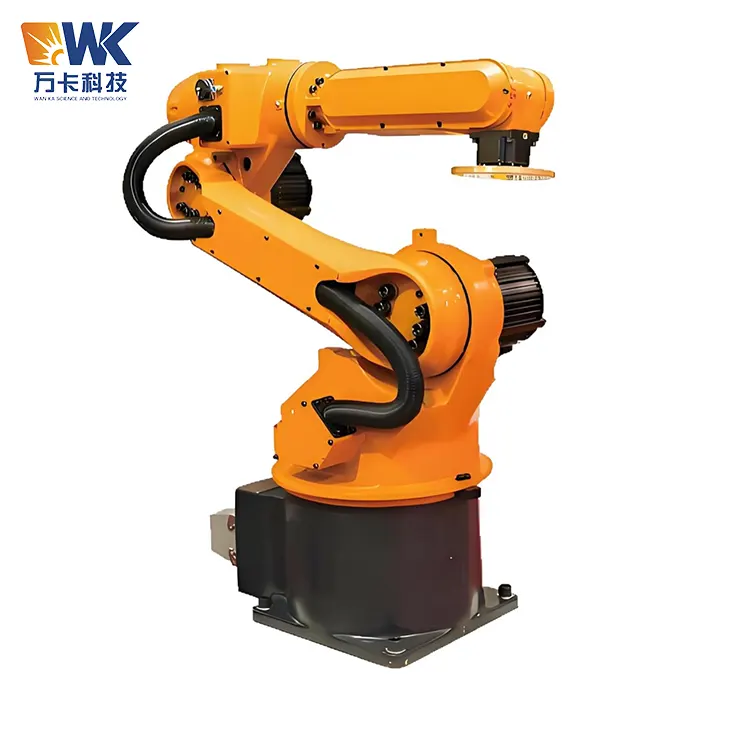
Purchase the 4 Axis Handling Robot manufactured by Wanka Technology Supplier. This product is specifically designed for repetitive handling tasks such as palletizing, loading and unloading, picking and placing, and assembly. It is compatible with a load range of 3 to 1800 kg, with a maximum arm extension of 3255 mm, and a repeatability positioning accuracy of up to ±0.05 mm.
The 4 Axis Handling Robot is a joint-type robot developed by Jinan Wanka Technology Factory for industrial automation handling scenarios.
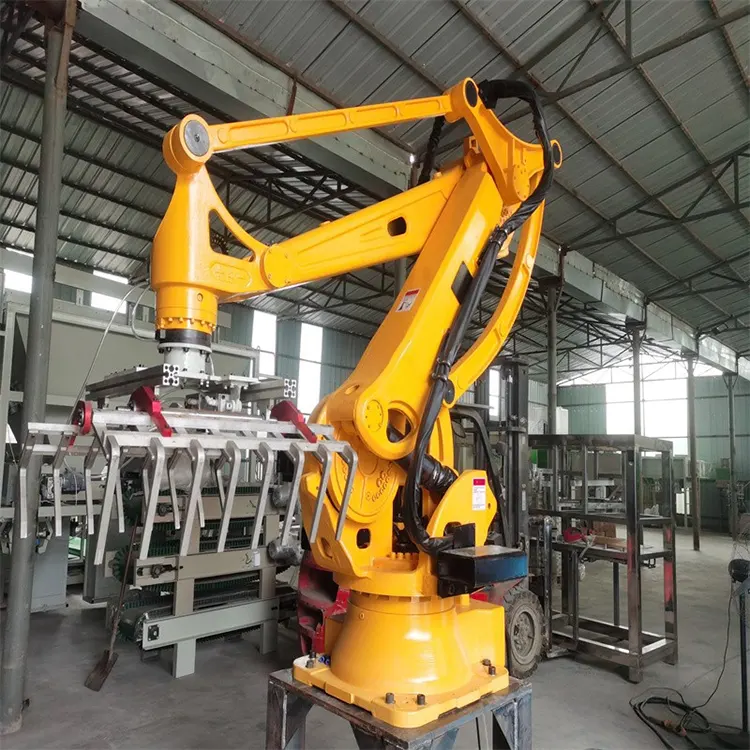
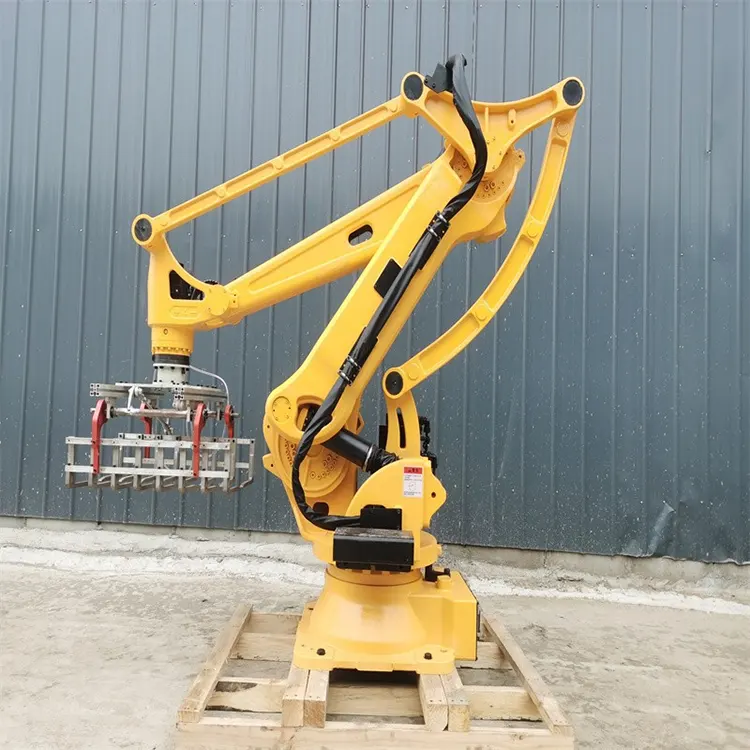
The 4-axis mechanical hand has four rotational joints, corresponding to the waist rotation, large arm swing, small arm swing and wrist rotation, and can complete operations such as material grasping, transportation, stacking and placement within a certain space range.
Compared with the 6-axis mechanical hand, the 4-axis mechanical hand has a simpler structure, lower cost and faster speed, and is particularly suitable for repetitive handling operations with low flexibility requirements.
Work process
The operator sets the transportation path and action parameters through the teaching device or offline programming software; the mechanical arm automatically completes the grasping, transportation and placement of materials according to the preset program; the controller monitors the positions and speeds of each axis in real time to ensure precise and smooth movements. The entire process is highly automated, and one person can monitor the operation of multiple mechanical arms simultaneously.
Product core advantages
The core value of the 4-axis handling robot lies in addressing the three major pain points of manufacturing enterprises: Firstly, "labor shortage" - it is difficult to recruit and retain workers for repetitive handling positions; secondly, "work injury risks" - manual handling of heavy objects leads to frequent cases of lumbar muscle strain and injuries; thirdly, "efficiency bottlenecks" - manual handling is slow and inconsistent, which restricts the overall production capacity of the production line. One 4-axis handling robot can replace 2-3 manual handlers, and the investment recovery period is usually within 6-12 months.
Safety Operating Procedures
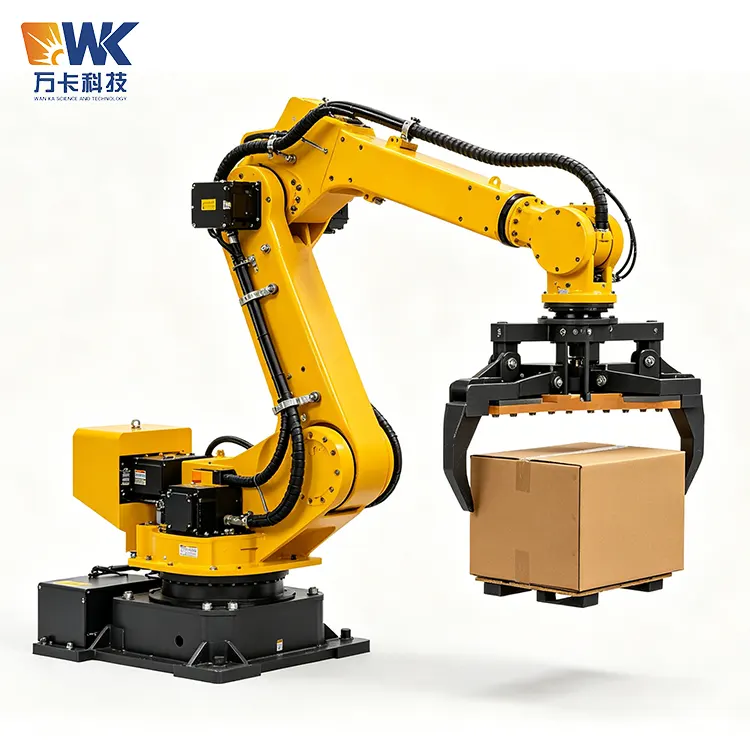
The 4-axis handling manipulator is an industrial robot, involving multiple risk factors such as high-speed mechanical movement and heavy object handling. All operators, maintenance personnel, and managers must strictly adhere to the following safety regulations:
1. Operator qualifications and training
Only personnel who have received training from Wanka Technology or its authorized party and passed the assessment are allowed to operate this equipment. Operators must be familiar with the structure, performance, operation procedures, emergency stop operation, and emergency handling methods of the equipment. Personnel without training are strictly prohibited from operating the equipment. It is recommended to conduct a safety refresher training once every six months.
2. Safety fences and area isolation
The robotic arm must operate within a physically isolated safety zone. Fixed safety fences or protective nets must be installed around the equipment, and safety barriers or safety door locks must be equipped. The height of the fence should be no less than 1.5 meters, and there must be a minimum safety distance of 500mm between the fence and the movement range of the robotic arm. The safety door must be interlocked with the control system - when the door is opened, the robotic arm automatically stops operating.
3. Daily Startup Inspection
Before each start-up, the operator must conduct a comprehensive safety check: verify that the movement of each axis of the manipulator is smooth and there are no abnormal noises; check if the bolts and connecting parts at each joint are loose; confirm that the end effector (vacuum cup or gripper) is in good condition and securely installed; inspect for any wear or damage to the cables and air tubes; ensure that the emergency stop button functions properly and the safety grating operates normally.
4. Programming and Debugging Safety
The programming and debugging phases are periods with a high incidence of accidents. Operators must use the teaching device to set the trajectory in a slow mode (usually 10%-20% of the rated speed). When running a new program for the first time, it is necessary to use the "single-step running" mode to verify each line one by one. It is strictly prohibited to run the new program at full speed without confirming the safety of the motion trajectory.
5. Safety Requirements During Operation
When the mechanical hand is in automatic operation, no one is allowed to enter the interior of the safety enclosure. Operators should stand in the safety area to monitor the operation status of the equipment. If any abnormal noise, vibration or smoke is detected, the emergency stop button should be pressed immediately. It is strictly prohibited to touch any moving parts while the mechanical hand is in operation.
6. Emergency Handling
In case of an emergency, immediately press the red emergency stop button or pull the safety rope. All movements of the equipment will stop immediately. The emergency stop cannot be released before the fault is resolved. If you need to enter the enclosure for maintenance, you must cut off the main power supply of the equipment and hang a lock saying "Under Maintenance, Do Not Close Switch".
7. Safety during Maintenance
Before conducting any maintenance, cleaning or repair work, the main power supply of the equipment must be cut off, residual air pressure must be released, and a warning sign must be hung. Appropriate tools and safety protective equipment must be used during the maintenance. After replacing the end effector or repairing the joint components, a low-speed no-load test must be conducted before resuming production.
Core selling point
1. High rigidity structure, stable and reliable for heavy-load handling
2. Large working space, covering a wide range of operation areas
3. High precision repeated positioning, ensuring consistent operation
4. High-speed operation, significantly reducing cycle time
5. Simple programming, quick deployment
6. Flexible adaptation to various end effectors
7. Low energy consumption operation, reducing operating costs
8. Maintenance-free design, reducing maintenance costs
Application Areas and Cases
1. Palletizing and Packaging
Case 1: A food processing enterprise in Konya, Turkey (Turkey)
This enterprise supplies bagged flour and grain products to the Middle East region. It requires approximately 2,000 25kg packaging bags to be stacked every day. Previously, it used manual stacking, with 8 workers working in three shifts. Workers suffered frequent lumbar muscle strain and the staff turnover rate was extremely high. In 2024, the Wanka 4 Axis Handling Robot (with a load capacity of 50kg and an arm span of 2,000mm) was introduced, combined with the conveyor line and pallet positioning system, achieving fully automatic stacking. One mechanical hand replaced 6 workers, and the stacking speed increased from 120 bags per hour by manual workers to 450 bags per hour by the mechanical hand. Production supervisor Ali Yilmaz commented: "The programming of the Wanka's 4-axis mechanical hand is very simple. Our maintenance team mastered all operations in just three days. The investment was recovered within 10 months. Workers were liberated from strenuous physical labor, and the staff turnover rate also dropped significantly."
Case 2: A beverage filling enterprise in Warsaw, Poland (Poland)
This enterprise supplies bottled beverages to European chain supermarkets. At the end of the production line, the filled bottles need to be moved from the conveyor belt to the pallets. In the past, it required four workers to work in shifts, and the workers' prolonged repetitive bending movements led to frequent occupational diseases. After introducing the Wanka 4-axis handling robot (with a load capacity of 20kg and an arm span of 1500mm), one robot, combined with a visual positioning system, automatically identifies the position of the bottled beverages on the conveyor belt and completes the grasping and stacking. Production manager Anna Kowalska said: "The deployment of Wanka's 4-axis robot is very fast. It took only three days from unpacking to production. What we value most is the stability and low failure rate of the equipment - it has not had any problems for more than half a year of operation."
2. Material Loading and Unloading on the Machine
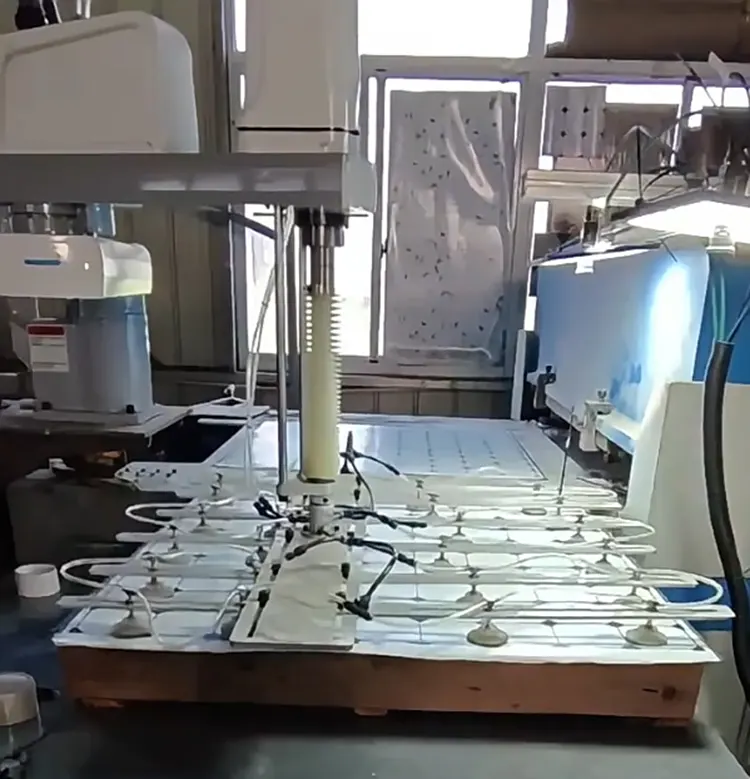
In industries such as metal processing and injection molding, 4-axis handling robotic arms can replace manual labor to complete the loading and unloading operations of processing equipment. The robotic arm takes materials from the storage bin → places them in the machine for processing → takes out the finished products → and places them in the finished product area in a fully automatic cycle, enabling the machine to achieve "lights-off production".
Case 3: An injection molding processing enterprise in Ho Chi Minh City, Vietnam (Vietnam)
This enterprise supplies plastic casings for the electronics industry and has 12 injection molding machines. Previously, each injection molding machine was equipped with one worker to handle the picking up and trimming of parts, and the workers were constantly exposed to high temperatures, making recruitment extremely difficult. In 2024, we introduced Wanka 4-axis handling robotic arms (with a load capacity of 5kg and an arm span of 800mm), combined with custom grippers, to achieve automatic extraction, cooling, and stacking of injection molding parts. One robotic arm can serve 2 injection molding machines, and only 2 inspection workers are needed for 12 injection molding machines. Production Director Tran Van Minh commented: "The 4-axis robotic arm has a simple structure and a low failure rate. Our maintenance team can easily maintain it. The most crucial point is that it solves our most troublesome recruitment problem."
Send Inquiry
Contact Info
-
Address
No. 13 Workshop, Xinglonghai Industrial Park, Jiyang District, Jinan City, Shandong Province, China
-
Tel
-
Email
For Sheet Metal Storage, Profile Warehouse, aser Loader or pricing inquiries, share your email—we'll respond within 24 hours.
Related Products
News Recommendations